Friday, September 25, 2015

TEENAGE PREGNANCY: TRUE LOVE AMIDST FLAMING OPPOSITION

by: Norberto Betita

(This is an excerpt from my book)

The Francis Tom and Sheila Paredes Story

The couple Francis & Sheila Paredes
They were both deprived of patriarchal presence and guiding paternal hands. Francis lost his father at age three. Sheila was without a father since birth. They were journeying their common formidable frontiers even in earliest childhood placidly trailing the light that gleams along the dark and dreary road to the future. They were held and guided by the weary but unfailing protective hands of single mother-providers whose hearts are lined with precious rubies and courage reinforced with strongest steel.

Their teenage love story started with attraction and fondness of a 14-year old third year high school student at the Surigao State College of Technology (SSCT) and a 16-year old AB English college freshman at the Saint Paul University-Surigao (SPUS). Sheila was a student of Francis Tom’s mother. In a short time it developed into an infatuation which eventually culminated into a youthful loving relationship which their memory never failed to recall---July 23, 2003. Parents of both believed it is no love at all; they were too young to be in such a relationship that is only allowable for more mature individuals. Vigorous opposition began to mount, especially on the side of Sheila, which is not surprising considering her age of fourteen. A little later, Francis Tom’s mother expressed her clear opposition. But Francis Tom insisted that it is true love amidst everybody’s antagonism. In his young life, he remembered to have viewed and believed Sheila to be his life. He felt his being is empty for each hour that he did not have her in view.

On account of extreme opposition, especially as he was no longer allowed to visit Sheila, he went on heavy drinking and too much drunkenness. He tried to make a visit to Sheila’s apartment, but denied even more intensely by the latter’s grandmother. As a result of his continued attempts to meet with Sheila even in his drunkenness on New Year’s Eve of 2003 notwithstanding the warnings, he was eventually thrown from the motorcycle which he borrowed from his uncle, resulting to a broken front tooth and several abrasions in the body. The accident also caused injury to an old man bystander. In exasperation his mother sent him to the police which incarcerated him for three days for the injury of the old man. For a while he felt continued headaches which he attributed also to the same accident. From such actuations and eventual imprisonment, he thought he will finally be forgotten by Sheila. With his broken tooth and several injuries he imagined that Sheila will be disheartened and dismayed. But instead Sheila showed up and cared for her injuries each day until finally healed. In his final initiation with UPSILON PHI SIGMA ON February 21, 2004, Sheila still assisted her in the healing process of the physical effects of fraternity paddling. 

The family
Like many other boys his age, he has been exposed to the lure of pornography in the internet. In the vulnerability of youth, the smut and obscenity which are common in pornographic materials tempted him and triggered his desire to indulge in sexual experimentations. And their closeness together, resulted in an unwanted and irresponsible act not admissible for their age. They continued to meet, but the opposition on the side of Sheila’s mother increased. In March 2004 they eloped. However, his mother did not consent that they live together in such a very young age. Hence, with his mother’s persuasion, they returned Sheila to her mother. By his mother’s request Francis was allowed to visit Sheila. When Sheila transferred residence at Tagana-an in April of the same year, Francis still followed and visited her to prove the seriousness of his intentions. During one of his visits, driven by their closeness, another undesirable event happened which flamed the ember of opposition that had since been following their youthful relationship. In bitterness, Sheila’s mother swore no longer to allow Francis to visit or see Sheila anymore. He was considered a threat to Sheila’s future.

However, true love amidst flaming opposition finds its way for two hearts to be reunited. Francis clandestinely left his cellphone to Sheila and he eventually contacted her for them to meet once more. And in the same month of April of 2004, they again eloped.

Francis’ mother was so confused at the kind of affection and closeness that these teenaged possessed. While she was short of confidence that such a young love will take root, she eventually consented to help them hide from Sheila’s mother with the assistance of friends until the flame of anger subsides. Perhaps in her mind were wandering the thoughts of Francis’ being charged of kidnapping or any other criminal liability, but not Francis. The flaming opposition turned back to ember as soon as it was known that Sheila was pregnant. She had her first pre-natal check-up in May of the same year. There was nothing that the opposing parents could do but to support Sheila in her pregnancy to make sure of her safety and that of the fetus. Sheila was only 15 years of age. They could not be married in accordance with the provisions of law. Hence, they have to live together in a cohabitation relationship. 

With proud mothers and aunt
Not even his goodly mother-provider had the conviction that he would do well as a husband and father in his youthfulness. She worried that Francis did not even consider the weight of responsibility that was before him as an unemployed young man. But unlike the many young men who shunned responsibility after a mistake, Francis did not eschew his accountability and determined to stand by Sheila and their upcoming child to reciprocate the love that Sheila had shown him. While he was in the Dean’s List during his first year of college at SPUS in 2003-2004, he decided not to study until Sheila delivered the child. Despite his inadequacies as a young man, he wanted to prove that he is worth the love of his wife and forthcoming child. He wanted to drive a tricycle, but no tricycle owner would allow him because he was without a driver’s License. He applied for work at TT and Company and was employed with a daily salary of P90 equivalent to a twelve-hour duty. It was during this employment that he learned to rummage clean left-over foods from the clients of the restaurant and eat the same inside the rest room. He realized he never dreamed to be in such a condition, nor does his mother. Yet he appreciated those trying and deplorable encounters for it helped him learn the hard art of responsibility. He came to recognize the sweetness of freedom that comes with responsibility. It motivated him to do and make better his race to the future. His vision improved and his character changed.

After three months at TT & Company, he transferred to Jolibee. While in this employment their son Ranzi was given birth on November 6, 2004. Sheila was only 16 years old, a mother but not yet a wife. Francis became a father at 18, but not yet a husband. He dogged at supporting the needs of his son and Sheila all by himself. A recap of his and of Sheila’s fatherless march in their earlier life left him wanting and earnestly yearning to be a true father to Ranzi and a faithful husband to Sheila. He wanted never to repeat those sad experiences of childhood when he longed for a father’s hand and there was none to hold. He committed himself with a firm and resolute certitude that he will walk and run by Ranzi’s side as a father. He worked even harder. His efficiency and effectiveness as a worker was recognized; he was promoted and awarded as Best Station Leader. But even then, he came to a moment of deeper consciousness that no matter how hard he tried, his advancement is limited only upon the bounds of his inadequate resume and incomplete qualification. In moments of reflections he came to understand how hard life was to be a father at a very young age and unprepared. He now comprehends the value of listening and obeying parental counsels. Yet, there was no more way to escape the youthful parental responsibility, nor did he have any thought of shunning. He realized his mistake, yet he said, “I did not have any regrets, for notwithstanding my youthfulness, I am pretty sure that she was the woman for me. I love her and she loves me.”

Father and son
As Ranzi came in sight and welcomed the desirable embraces of still confused grandmothers, the remaining ember of opposition dispelled and was eventually extinguished. The fruit of the true love amidst flaming opposition healed the hearts. With better perspective, Francis requested his mother for assistance to go back to college while he tries to work part time to support their other needs. Sheila’s mother on the other hand also offered support. College at SPUS was expensive, so Francis transferred to SSCT. He shifted to a course leading to Bachelor of Science in Education major in English, while Sheila enrolled in the same school to complete her high school education.

To make sure he will have a much better resume as he prepared for future battles with life, he took every opportunity to be involved in extra-curricular activities at school. He was Vice President of the SSCT Student Supreme Government, and later as secretary. He joined Rotaract Club of Metro Surigao and became President. Sheila also joined the UPSILON fraternity and the Rotaract Club.

When the proper time and age came for them to be united in matrimony, they immediately scheduled to join the mass wedding on December 29, 2008. Their wedding was devoid of grandiosities and pretentions. They did not aspire for an elaborate wedding feast. All they wanted was to be legally bound as husband and wife for better or for worse. In love they were united and in dreams and vision for the future, they were not separated.

Francis was eventually graduated with a degree in education in 2009. In a matter of ten days after graduation he was hired to work at Chemical Alloy Corporation as a Lube Specialist and later as Account Manager for Caraga Region. For the first time, he tried to take the Licensure Examination for Teacher (LET), but failed. He was not frustrated. In 2011, he resigned and worked at the Kinglong Trucking and Barging Company (KTBC) as secretary to the General Manager. It was also the time when Sheila graduated from college. She also worked with the Kinglong Trucking to save and prepare for the LET. Together they took the LET, but both failed. That was kind of a trial for them, a test of endurance. But they determined and again saved and prepared for the 2012 LET examination. This time they are blessed as to hurdle together and so became duly licensed teachers. For a moment Francis taught college at the Siargao Island Institute of Technology. Eventually they jointly qualified and was employed at the Alegria National High School in May 2013. 

Mother and son
They were so focused on building the future of Ranzi that they seemed to forget that he is old enough at 11 to yearn for a brother or sister. But they say, it is in the plan. The same year that they started secured employments in a public school, they enrolled for the Master of Arts in Education (MAE). In the course of his master’s education he also started his research on the Sinurigaw grammar and then published his first book of “Sinurigaw: Pormada, Plastada, Tunada, Pasabot” on February 2014 which gave him the opportunity to be a presenter on the 12th Philippines Linguistics Congress at the University of the Philippines-Diliman in November 26-28, 2014 on the subject. On February 2015 his MAE thesis entitled “Impact of Mother Tongue-Based Language of Instruction in Learning English Grammar” qualified and was acknowledged during the 11th International Conference on Bilingual Studies at Chiang Kai Shek College. The same research paper also qualified during the 2nd International Sanrokan Conference on May 13-15, 2015 at the Romblon State University in partnership with UP-Diliman and NCCA.

In May of 2015, Francis and Sheila together marched with humble pride beside their mother-providers who still were mystified and choked with unbelief of their youthful journey to success, as they were together conferred the degree of Master of Arts in Education. Sheila was 27 years old, while Francis has just turned 29.

His popularity and prominence kept pace when he attended a linguistics conference held at the University of Southeast Philippines-Davao, on August 2015 as a presenter on the topic “Language Use by SSG Candidates in 2015 Miting de Avance: English or Mother Tongue.” He is also scheduled on September 23-27, 2015 to present his paper on “Sinurigao: Pormada, Plastada, Tunada, Pasabot at the 9th Free Linguistics Conference organized by the Linguistics Society of the Philippines and De La Salle University in Manila. He will be with his dearly beloved mother-provider, to let her feel that she is not a failure in all her sacrifices for him. Francis is a member of the Linguistics Society of the Philippines and the Linguistics Society of Mindanao.

As a teacher by profession, he definitely submits to the wisdom of what former President Elpidio Quirino had to say: “Teachers, as leaders in each community, you should spread light. Go beyond the present horizon. See if you can dig up something which will interest the people and make them follow you as their confirmed leaders." He had this posted on his Facebook timeline. 

The teenage couple with their son
He believes that there is no limit to what man can attain and achieve even after a desperate and reckless mistake and subsequent failures. Success comes by diligent effort and unwavering determination to rise from every fall and move forward with unflinching courage and faith.

In their desire to share their love story, especially to the Filipino youth who is now bothered by the statistics that one in ten young Filipino women age 15-19 has begun childbearing and one in five (19 percent) young adult Filipino women age 18 to 24 years had initiated their sexual activity before age 18 according to the results of the 2013 National Demographic and Health Survey (NDHS), Francis has this advice: “It is very nice to love and be loved. But it is best to wait for the proper time, proper circumstance and proper relationship before deciding to marry. To you young men please avoid the ever tempting invitation of pornography and the seductive lure of sexual experimentation; it can be an expensive, dangerous and destructive vice. Wait for the best and proper time to use your procreative powers. To you young women, don’t ever be tempted and persuaded by the lustful offensives of young men your age. There will eventually come in the proper time of your life the best man who will offer his most sincere love and walk with you in a wondrous march to the most sacred altar of matrimony. Sheila and I have made a serious mistake as teenagers and our journey to recovery had never been easy. Good that our puppy love turned mature even at an early age that we had learned to fight our battles and win. I am likewise lucky that Sheila in her teenage must have been looking for the love of a father and perhaps she found it in me, and unexpectedly she loved me without equivocation to be the father of his child and the best husband for her. But it only happens in a million. Young men and young women beware.” 

On their wedding day

The once dark horizon is now gleaming with light beckoning a brilliant and happier future for Francis, Sheila and Ranzi. Their story of true love amidst flaming opposition had become their bridge across the formidable frontiers which to them unmasked early in life. Opposition is no longer an issue, but respect---with both mother-providers now ever confident that their story of true love did and will eventually weather the storms along their longwinded journey to the future. The grandmothers of the teenaged-borne grandson--- Ranzi---are now waiting with eagerness for a new grandchild that will be born in maturity. Francis and Sheila, still young adults as they remain, are now appreciating the memories of teenage pregnancy and motherhood, and teenage fatherhood, while in constant nurturing of their true love and savoring their exultant accomplishments with better and definite visions to the distant but blooming future.

Tuesday, September 15, 2015

THE FURNITURE MAKER AND THE BOILED YOUNG CORN

The Lope M. Codilla, Sr. Story
by: Norberto Betita

(Excerpts from my book)

The furniture maker-Lope U. Cudilla, Sr. 
Even in moments when he is carried at the brink of that cavernous and gloomy void, receiving several bags of blood for transfusion, he still can afford to do his brand of being a man of humor. In the depths of his miserable and almost hopeless condition at the hospital he nevertheless crafts pranks that generate a smile from his compassionate visitors and blood donors. This joyful character remains in his lifetime as an antidote of every suffering that he has encountered in his life. Even his children and friends after witnessing his condition of needing several bags of blood for transfusion thought that he will not live long, but he pulled himself away from that sure pathway to his ominous and foreboding fate. He was sustained by his enduring faith in God and his continuing belief that laughter is indeed the best medicine to every misery and woe.

Whenever he felt sad and lonely he calls for relief by doing some jokes that would attract attention of those who are truly concerned of his welfare. Once, while viewing the General Conference rebroadcast at church my wife noticed him drinking water from a wine bottle which still carried the label and name of the brand. My wife visited him and requested him never to do such an appearance of evil in a solemn spiritual assembly. He just laughed and expressed gratitude that he was recognized. He felt that there are still people who are most concerned of his spiritual welfare. He swore never again to do the same. 

With wife Laurencia
Lope’s early life had been such a story of continued drowning into the depths of life’s whirlpools and swimming vigorously against the powerful adverse currents for survival. He is a native of Leyte. During his youthful years, life has been very difficult in their place. Nowhere could he find work to earn for a living. He heard about employment opportunities at Aras-asan, Cagwait, Surigao del Sur where a lumber company was regularly hiring employees. Moved by his passionate desire to find work, he wanted to try his luck and so he travelled from Leyte to Cebu and then to Tandag, Surigao del Sur. While aboard a pump boat from Tandag to Aras-asan the boat capsized and he was left floating in the sea. He was rescued by a man named Efren who brought him to Lianga, Surigao del Sur. He served with Efren’s family as house help, doing errands and household chores. In order to earn he went into amateur boxing. But he realized it has not done anything good for him. He felt frustrated by the turn of events in his life. He started to miss his family and he wanted to go home.

His eldest Lolita with children
There came a time in his life when he felt encircled in complete darkness and all his hope vanished. The pragmatic hardnosed experiences of life’s dismal contests and grapple with hardest times somehow compiled thoughts that derailed the mind. While his capability and training was only for a four-round in boxing, he took the challenge of fighting for six rounds, wanting to be knocked down and die. But he won instead.

He requested his rescuer Efren to allow him to leave back home. But he was held back until a replacement arrives. While he had the excitement of having the opportunity to go home, when his replacement Laurencia---the younger sister of Efren came, he lost his every desire to be reunited to his family. He said, “When I saw her, I felt we had long since known each other.” He felt reinvigorated and thought that life was may be just like a joke. And from such short attraction their love story and eventual marital journey began.

He stopped his boxing career and instead trained in furniture making in Efren’s shop. For a while they lived and served together in his brother-in-law’s household. But when his wife became pregnant of their first born, they decided to return to Cebu. There he continued working as a carpenter and furniture maker and eventually became and expert craftsman. While in Cebu, their first born Lolita was given birth. At first life was a little easier. However as four other children---Lope, Jr, Letecia, Lorito, and Leonardo, came into the family, life again became harder and harder. In consequence of poverty two of their children died in infancy. That was such a very painful experience. He felt being pulled back again into the whirlpool of life. Yet he swam his way back against the resurging current of adversity and continued to fight his battle for survival. 

One Sabath Day with the whole family
When Lope heard of a hiring for furniture makers, he applied and was hired to work in Surigao City. After a year working with Willy’s furniture shop, he was hired by a prominent furniture businessman, Mr. Kang. He felt secured with a salary of twenty pesos per day. However, another tragedy came into their family life when their son Leonardo died by drowning. In moments of reflection, as to why these things were happening to him and his wife, he again thought of life as being just a joke and he must have to press on.

His wife Laurencia was a full-time mother. While trying to make both ends meet from that meagre income of twenty pesos a day, another child was born---Lucresio. He was happy that in his circle of life, God was returning back one that was lost. But the whirlpool of adversity seemed not to surrender on him and another misfortune came when Lope was diagnosed with Hernia---a protrusion of an organ that descended into the scrotum. He was treated and was advised to rest for six months. There were no benefits for daily waged personnel during those times and that was real disaster for them. 

Son Lucresio and family
His wife Laurencia decided to start buying and selling corn from out of the very little assistance that Lope’s employer had given for them to survive. All that Lope could help was to cook the boiled young corn for Laurencia to peddle around the city, walking a total of six kilometres to and from downtown Surigao City, carrying the heavy basin full of corn for sale. When Lope’s condition began to improve, he started going with his wife in buying and selling young corn, while the elder children would watch the youngest son. For six months they lived solely from the little earnings that they have.

When Lope resumed work his wife continued to do buying and selling young corn to supplement his income. For a while they were able to support their needs, but two other children came into the family---Aleja and Louie. As these children came in succession, he always felt that God was slowly returning back all that were lost from him. Still he thought that life is a joke. When the two elder children begun school, their wallet became regularly empty. But they strived to meet their growing needs. They do not want their children to be deprived of their only hope for relief from the bondage of poverty. They wanted them to be educated for their future.

Then the most devastating pull from the whirlpool of life came. His employer closed business and he was left without a job. He was doomed to hopelessness. The wonderful visions for his children’s future became fogged and obscured. Being without a job while family needs were increasing was truly overwhelming. He and his family suffered the excruciating pain of extreme poverty. But with his guts to laugh even against the tearful experiences of their pitiable circumstance, he arose back with greater determination and profound conviction to win his battle together with his wife. He kind of heard a voice, “You can start over again and change your course from a downward, twisting, disappointing path to a superhighway to peace and happiness” (Richard G. Scott). Hence, he did not dread the winds of adversity against them but faced it with more courage and faith. 

Daughter Aleja with husband
He had nowhere to go but to join with his wife in the boiled young corn peddling. In the early dawn while the children are asleep, they would ride a bus to buy young corns from farmers and back home boiled them for peddling. Together they walked daily under the heat of the rising sun into the city proper, carrying over their heads the basins filled with boiled-young-corn. They did not send their children into the streets to beg, but to the schools to learn and educate.

He joined hands with his wife in the work which by then was their only hope for survival. He continued accepting occasional carpentry jobs, but not for long. Peddling boiled young corn became their regular source of income until their children went to high school and even through college. While others in their neighbourhood yielded in their battle with difficulties by employing their children into the same lowly occupation, Lope and Laurencia did not give up on the education of their children. He could not afford to have his children go hungry and stop schooling. He knew that education is the only way for his children to rise above poverty. It matters not to him if he and his wife have to continue swimming in the whirlpool of life, for as long as their children are safe in the shores to walk with backpacks full of provisions to confront their own challenges in life.

They planned their family life so as to make sure that their little income could provide all their needs. They were taught to live within their means and they obeyed. They tried to obey the Lord’s economic law, and they were blessed. There were times when they have to raise a pig or two for fattening and chickens to cover enrolments of their college students. In all his battles, his humorous character had helped him overcome stresses and defeating circumstances. 

Son Louie and family
The road that he and his wife tracked together with their five living children was never comfortable, but to him it was worthwhile. He knew pretty well then that he and his wife will not be able to rise above their circumstances, but they labored hard to equip their children and their posterity with battle gears to conquer life’s adversities unto triumph and victory. They built in their children’s life the necessary foundations that will prepare them to hold strong when challenges of their own will be blown against their road towards growth and progress.

He and his beloved wife first experience the joy of victory when their eldest daughter graduated with a degree in Science Education and passed the Teacher’s Licensure Examination. Greater joy and gladness came when all their children graduated from college. All their five children earned baccalaureate degrees---three with bachelor’s degrees and two with vocational courses. Their eldest is now in the United States of America; the second also a teacher by profession is now a college instructor; the third, the kind of a straggler and adventurer earned a degree in computer science and is now in business; the fourth a two-year courser was married to an American and is now preparing for her Visa; the youngest, although was earlier strangled in the vulnerability of youth, also finished two years in college. All their children were already married and they have eight grandchildren. 

Son Lope, Jr with his son
If he would be asked what is meant by the Lord’s promise that He “will pour out blessings where there shall not be room enough to receive”, he probably would joke that with all his five children now married and have children of their own, he really has no room enough to accommodate them.

Even when their children where already gainfully employed the furniture maker turned boiled young corn peddler with his beloved wife continued to enjoy the very humble trade they loved the most which prepared their children for future provident life enough to fight their personal battles with adversity and contribute to the good of society in which they live. Lope and Laurencia vowed to live together as one amidst hardships and misfortunes and the spinning whirlpool of life. In the dispersed twilight of their lives they sealed their marital covenants in a most sacred setting to live together not only for time but throughout all eternity.

They celebrated just this year 2015 their 50th wedding anniversary. Lope is now weak and feeble, deteriorated by long years of hard labor and ageing. While in the hospital he asked my daughter, “Kinsa man ka?” (Who are you?). My daughter surprised introduced herself and reminded that he knew her very well. He replied, “Wala man ko kaila nimo?” (I do not know you?) When he observed that my daughter was so worried about his condition, he told her “Ayaw’g banha sa uban, wala pa ko nawadan ug buot.” (Don’t tell others, I have not yet lost my memory). Even in his worst condition after a surgery, he still carried the thought that life is just a joke. The humorous optimism of the furniture maker turned boiled young corn peddler sustained him in his “walk through the valley of the shadow of death.” He still lives to tell his story to inspire his posterity and others who might have the opportunity to read the chronicle of his life.

Friday, September 11, 2015

GIVE PEACE THE CHANCE

By: Norberto Betita

(Excerpts from my book)

Photo from www.google.com.ph
It is ironical that because of our Christianity we vehemently oppose the maximum punishment of death in our country, yet we are killing each other. As a people I believe we need to think deep and better evaluate our situations and not learn and desecrate. We have so much knowledge and voluminous writings kept in history libraries where we can learn the wisdom of those before us in so far as the cost of our independence and national democracy is concerned. Yet while both parties in our internal conflict were long since sitting on the peace negotiating tables not only in our own domestic democratic conclaves, but also in internationally known councils of peace negotiators, we never have reached a resolve.

Our ancestors have long fought for our independence and freedom against tyrannical invaders and aggressors. Our National Hero Dr. Jose Rizal, in his sequel of the El Filibusterismo (The Reign of Greed -1891 - translations from the Spanish by Charles Derbyshire), was quoted, “There are no tyrants where there are no slaves.” (https://en.wikiquote.org/wiki/Jos%C3%A9_Rizal). For long, Dr. Jose Rizal fought his battles with letters and words. In his “El Filibusterismo” he wrote:

“It is a useless life that is not consecrated to a great ideal. It is like a stone wasted in the field without becoming part of an edifice.

“You must shatter the vase to spread its perfume, and smite the rock to get the spark.

“The school of suffering tempers the spirit, the arena of combat strengthens the soul.

“The glory of saving a country is not for him who has contributed to its ruin.

“Pure and spotless must the victim be if the sacrifice is to be acceptable.” (https://en.wikiquote.org/wiki/Jos%C3%A9_Rizal).

From several of his writings he was quoted:

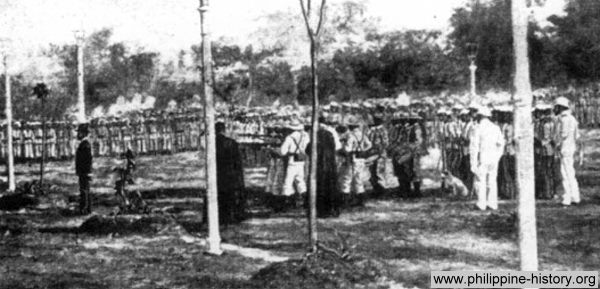
Execution of Dr. Jose Rizal
“We want the happiness of the Philippines, but we want to obtain it through noble and just means. If I have to commit villainy to make her happy, I would refuse to do so, because I am sure that what is built on sand sooner or later would tumble down.” (Letter to Blumentritt, 31 January 1887).

“Filipinos don't realize that victory is the child of struggle, that joy blossoms from suffering, and redemption is a product of sacrifice.” ("Como se gobiernan las Filipinas" (How one governs in the Philippines), published in La Solidaridad (15 December 1890)

Indeed, our country’s journey to freedom and democracy costs one of the best Filipino blood. He was described by a friend thus: “His coming to the world is like the appearance of a rare comet, whose brilliance appears only every other century.” (Ferdinand Blumentritt, Philippinologist and Rizal's best friend, in his book Biography of Rizal, translated from German by Howard Bray (1898). https://en.wikiquote.org/wiki/Jos%C3%A9_Rizal). On the eve of his execution in December 29, 1896, he wrote his “Last Farewell”:

Oh how beautiful to fall to give you flight,
To die to give you life, to rest under your sky;
And in your enchanted land forever sleep. ("Mi Ultimo Adios", st. 5).

I go where there are no slaves, hangmen or oppressors;

Where faith does not kill; where the one who reigns is God. ("Mi Ultimo Adios" st. 13 - poem written on the eve of his execution (29 December 1896) - translated from the Spanish by Charles Derbyshire.).

Our great leader, Emilio Aguinaldo, the first president of the Philippines, during their struggles and fight for independence declared, "We cannot free ourselves unless we move forward united in a single desire." (Source(s):http://www.infoplease.com/ce6/people/A08...
http://www.angelfire.com/on/philpres/agu...). In their fight for the ultimate freedom and democracy which was envisioned and which eventually brought Dr. Jose Rizal to his heroic grave, many also offered their lives to make us free. Then as we become free, we sing the anthem song:

Land of the morning
Child of the sun returning
With fervor burning
Thee do our souls adore.

Land dear and holy,
Cradle of noble heroes,
Ne'er shall invaders
Trample thy sacred shores.

Ever within thy skies and through thy clouds
And o'er thy hills and seas;
Do we behold thy radiance, feel the throb
Of glorious liberty.

Thy banner dear to all hearts
Its sun and stars alright,
Oh, never shall its shining fields
Be dimmed by tyrants might.

Beautiful land of love, oh land of light,
In thine embrace 'tis rapture to lie;
But it is glory ever when thou art wronged
For us thy sons to suffer and die.

Photo from www.google.com.ph
Now after more than a century of freedom---no longer “dimmed by tyrants might”, her sons “suffer and die” not from invaders hands but from the same slaves of yesteryears now becoming tyrants---a sad characterization of the seemingly prophetic words of Dr. Jose Rizal: “Why independence, if the slaves of today will be the tyrants of tomorrow?” (El Filibusterismo, https://en.wikiquote.org/wiki/Jos%C3%A9_Rizal).

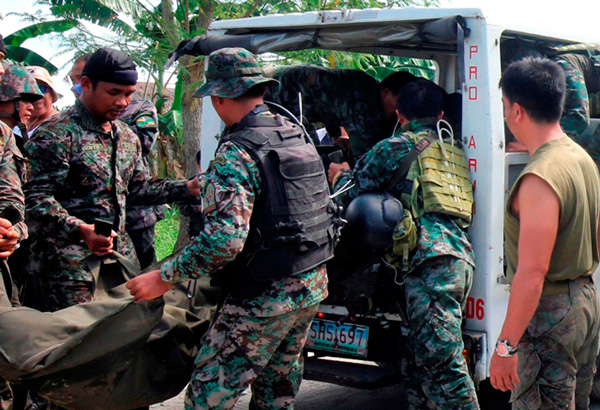
The dreadful injuries and damages of our internal war have resulted in physical mutilations and mental torments. Tender wives and children were struck with incessant grief as they witness the Philippine flag covered coffins robbing them of the joys of having their husbands and fathers back home. It is even pitiful for some of the insurgents as they die in battle without even the benefit of a decent burial or perhaps even the knowledge of their families. Most unfortunate are those civilians who lost their precious lives while inadvertently trapped in the switching of bullets between warring factions. Young men, who have been involved in this unending armed conflict between brother Filipinos, breathe their last of a wasteful life, while others live with animosity and hatred for their own brethren becoming permanents parts of their physical structure. 
 
Photo from www.google.com.ph
As I look far into the ravages and consequences of our internal war, I see a pathetically and absurdly dissolute desecration of human life and useless extravagance of national resources.

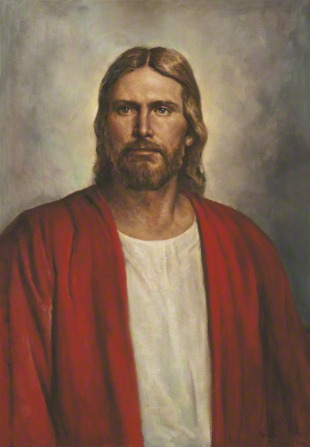
Together with Jeremiah of old, I express my lamentation: “Is there no balm in Gilead [the Philippines]; is there no physician there?” (Jeremiah 8:22). To those who sit in the panel of negotiators and arbitrators we ask, why not give peace the chance? Peace is a paramount priority that needs our unequivocal quest. It can be the antidote to many of our national ills. Perhaps as we sit together in the bargaining table, we should not be as the “scribes and Pharisees” which Jesus denounced as “blind guides, which strain at a gnat, and swallow a camel” who “make clean the outside of the cup and of the platter, but within they are full of extortion and excess.” (see Matthew 23:23-25). We need to remember that we are no strangers, nor are we foreigners, but fellow citizens of our beloved country---the Philippines, and are supposed to traverse all ideological boundaries and common cultures towards unity and peace. Thus, we need to eliminate the critical lenses that had long since blurred our view of a prospective peaceful reconciliation and instead utilize telescopic glasses to have a far better vision of an enlarged tapestry of the best benefits of peace. 

Photo from www.google.com.ph
King David in his psalms assured, “The Lord will give strength unto his people; the Lord will bless his people with peace” (Psalms 29:11). The Lord Jesus Christ likewise promised, “Peace I leave with you, my peace I give unto you: not as the world giveth, give I unto you. Let not your heart be troubled, neither let it be afraid” (John 14.27).

Our centuries of Christian heritage allowed us to understand that real peace is a feeling of wondrous love, well-being, tranquility and protection that emanates from God. It is this peace that led Dr. Jose Rizal to pen these inspired words in his Noli me Tangere (The Social Cancer – 1887, as translated from the Spanish by Charles Derbyshire):

“I die without seeing the dawn brighten over my native land. You who have it to see, welcome it--and forget not those who have fallen during the night!

“Truth does not need to borrow garments from error.

“Fame to be sweet must resound in the ears of those we love, in the atmosphere of the land that will guard our ashes. Fame should hover over our tomb to warm with its heat the chill of death, so that we may not be completely reduced to nothingness, that something of us may survive.” https://en.wikiquote.org/wiki/Jos%C3%A9_Rizal).

While my thoughts was lingering deep and chasing ideas to write, my sight loiters at the window in front where my computer was set, reaching far beyond the horizon into the sterling blue sky---a backdrop of the red fruit-bearing “Tambis” tree. The strong southern winds had just concluded its passion after two weeks of continued rage. Into my mind rings; how wonderful the peace that nature brings. How glorious it would be to sound a trumpet of a call for peace to our contending brother Filipinos as a citizen’s personal duty. How magnificent to one day witness the glad tidings that peace is sure to convey. I, therefore, hope and pray that we as a people and nation may give peace the chance.


Wednesday, September 9, 2015

RESPONSIBLE MINING: OUR BEST HOPE FOR ECONOMIC RECOVERY

By: Norberto Betita

(This is part of my Book)

The Taganito Project involved JGC constructing an HPAL smelting
plant for processing low-grade nickel ore into nickel metal
I have read many social media posts and news feds about our struggles as a nation and as a people. We are wondering what is wrong with us as a people; what is happening with our government. It is reported that many of our people who go abroad are among the best and trusted workers and most successful in their fields of training. While at home in the Philippines they are longing for the same opportunities to be opened to them, but it is nowhere to be found.

My barber friend struggled to send his children to college. One of his daughters worked locally as a registered nurse in a government hospital. For several years she found no growth and progress in her married life. She decided to try her luck to apply for a nursing job in New Zealand. Her family borrowed substantial amount of money for the placement fee and other expenses. Her job was the same as her work in the Philippines. But in a short time she was able to pay her loan, bought a car and gave her poor parents the opportunity to take a vacation in New Zealand, a break not even in their dreams. Eventually she transferred to Australia and earns even more, supporting the needs of her parents and the college education of her niece and nephew. At the same time she replaced the nipa hut of her parents with a modest medium type house. She told me, if she had remained in the Philippines, she should not have been able to provide her own family and her extended families the provident life that they now enjoy. 

Silangan Project Portal. (http://www.philexmining.com.ph/about-us/silangan)
I was once assigned to conduct credit investigation on a young client for his car loan, a brand new Everest. He graduated from a local school in Surigao City for a three year course in Electronics. He first found a job in Manila and later applied for a job in Singapore. In a short time he was able to acquire a residential lot in their barrio where he built a loan free residential building. He also acquired farm lands. His car loan was fully paid long before the term expired. If he had remained working in the Philippines, he should not have been able to acquire these things at his young age. His only sacrifice is that he is far from his family.

I know of many local executives in government and banking institutions who could not even afford a second hand car, but only after they retired and received their lump sum benefits. Many high profile professionals---MBAs, Masters in Education, Doctors of Philosophy, and others, who worked for many years do not have that marks of abundance.

The design of the proposed declaration of  decline toward to Boyongan
and Bayugo  deposits. (http://www.philexmining.com.ph/about-us/silangan)
We might ask why? What is the difference of a Filipino Nurse working in Australia or New Zealand and a Nurse working in the Philippines? What is the difference between a state college three-year courser working in Singapore and a Bank Manager in the Philippines? Why the stark difference in their ability to improve their standard of living?

Well, we might reason that their earnings had a multiplier effect when brought to the Philippines. But even if they have to stay in the country where they work, they still are living comfortably. These are proven by many Filipinos residing abroad. They are successful because they work hard knowing that what they earn will provide them more than enough. In the Philippines we earn less than enough.

My friend works full time in the church as Church Education System employee. He earns a modest salary, much higher than the local salary levels. His family lives in a well furnished apartment. He is provided with a car by the Church. Once he had the opportunity to have training in Utah, U.S.A. He met his very close Filipino friend. He was given a ride on his friend’s sports car. He found that his friend worked as a janitor in the Church office building, while proceeding with his college degree and providing for a small family. College is expensive is America and my friend thought that maybe his friend had taken an educational loan. But at least he proudly indicated that he is proud of his work as a janitor and comfortably affording a provident life for his family.

Our concern therefore is how can we as a government regulate and stipulate enough employment income for our workers to provide for their fundamental needs---food, clothing, shelter and medical needs and education. And how can we regulate the prices of these prime commodities. All the barriers I mentioned, except perhaps on political infidelity, have their common roots---unemployment, underemployment and high prices of prime commodities. These result to our people’s inability to rise above poverty. Thus they become easy recruits to insurgency, easily induced to immorality and in their ignorance they choose to be silent participants in our political calisthenics and easy victims of vote buying---the path to political infidelity. Only those who tried their luck in business did find greater success. But they remain to be the greatest minority. 

We have so much wealth in store to help us, as a people and as a nation, to rise above our present economic ills. However, not much has been done to utilize the abundant treasures that are spread in our lands and kept beneath our soils. Responsible mining of these hidden immeasurable reserves and resources can be our best hope for economic recovery.

However, a great deal of secularization and our abundance of brainy fellows create diverse opinions and ideologies on matters affecting our country. The miners believed in the tremendous benefits of mining. The environmentalists decry mining as a destructive industry, unfriendly to environment. The unemployed and underemployed workers want mining industries to prevail for it provides higher salaries and sufficient income. The naysayers lined the streets crying foul over the possible destructive effects of mining. The journalists report every minute detail of disadvantages and drawbacks, but never the prospective high benefits. Even our laws seemed to have their own share of diversity. There are laws which favor mining and there are those which favor environmental protection, yet these laws are complementary. Many among the silent observers could only do nothing but scratch their heads.

Protest during Philex Mining Stockholder's meeting. (http://www.demotix.com)
Sometimes our civility comes far from being civil. Every now and then we marched the streets complaining against mining companies and our government. We only look at the faults, but never appreciate the good. We even go against the requirements of the law, demanding for our absolute democratic freedom to do as we please, even to the extent of burning the equipment of mining companies worth billions of pesos. I once had a discussion with my son Robert about absolute freedom and limited freedom which was a subject in their class debate. He was for limited freedom, because of existing laws which prohibits one from doing a certain act. He explained that to go beyond the limits of the laws as an exercise of absolute freedom is to limit one’s freedom, because he will be subjected to punishment in violation of the law, which may even require the violator to go hiding or be incarcerated in jail. But to live within the limits of the laws is to have an out-and-out complete freedom to do that which is right. Freedom is not free for it has a price measured in terms of consequence. Civility is to be a participant in deeds that are right and to object the wrong in accord with the limits prescribed by our laws.

While I was yet an employee of the Philippine National Bank, I question the wisdom of many banks coming into Surigao City to do business. The MMIC-Surigao Nickel Refinery, which generated economic abundance in the City was already closed resulting to economic downtrend. As a banking and finance graduate I am aware of what it is that banks are after when they invest to establish a branch in a place. Yet I saw no better prospect that would provide future sound business for the banks in Surigao City, particularly with private banks.

Our agriculture could not even provide for the food needs of our city and province. While we are situated in the shorelines with several island components, our fishing does not warrant an industry and not even enough for local provisions. Tourism is never an equitable resource for employment then and even now.

Protesters during the Philex Mining Stockholder's meeting
http://www.demotix.com)
The Diwata Mountains surround our place as to leave us only a small tract---a few plains, for us to plant staple crops not even enough to supply our local needs. However, beneath these mountain ranges are hidden since time immemorial, immeasurable treasures that can surely create our city and province into a very progressive economy. Banking researchers should admit that these are the prospects that they are looking forward to. They knew that the Mining industry will need billions of pesos in investments. It will produce incalculable revenues. It will provide good jobs for the people. Business activities will be intensified. And sure, the banking sector will be more than sustained in their operations. All these we are starting to experience now in Surigao City and Surigao del Norte. And if these economic activities continue uninterrupted, there will no longer be a need for our people to migrate to other areas or even abroad to find better employment.

While we have other resources from which we can hinge on to bolster our economy, mining is one of our best options to rise above our present economic struggles. I quote this report from Andrew James Masigan:

“Unknown to many, the Philippines possesses one of the world’s largest deposits of gold, silver, nickel and copper. A study commissioned by the World Bank estimates that mineral deposits in the Philippines amount to nearly $840 billion, based on 2010 prices. Put into context, $840 billion is enough to pay the country’s external debts 14 times over.

“Our mining industry is sorely underdeveloped, which is why we haven’t really benefitted from the God-given bounty of our land. Large-scale mining investors are waiting in the wings to help us extract our mineral deposits; unfortunately, the new Mining Law, which contains the working parameters of foreign miners, is still stewing in Congress. So for now, 70 percent of the miners that operate in the country are of the small-scale kind, particularly those that mine for gold.

“Despite having the third largest gold deposits in the world, the Philippines continues to lag behind in gold production. We rank 19th out of 100 gold-producing countries. The Mines and Geosciences Bureau reported that gold production even dropped by a massive 50 percent last year with an output of just 15.762 metric tons as compared to 31.120 metric tons in 2011. In contrast, Australia, a country with less gold deposits, had an output of 250 metric tons.” (source: PH is third in gold deposits worldwide—so where is it? by Andrew James Masigan
September 15, 2013http://www.mb.com.ph/ph-is-third-in-gold-deposits-worldwide-so-where-is-it/).

The Philippines has the third largest mineral deposit of nickel in the world. “New Caledonia contains 21% of the world’s nickel laterites, followed by Australia (20%), the Philippines (17%) and Indonesia (12%)” (source: http://www.geologyforinvestors.com/nickel-laterites/). It is also reported that “The Philippines is the fifth-richest country in the world in terms of mineral resources, according to Bulatlat. It also has the largest nickel reserves in the world…” (source: http://nickelinvestingnews.com/5850-nickel-philippines-indonesia-supply-demand-export-ban.html).

If only we have given more attention to these treasures which is our share of the earth’s riches which God so bountifully kept beneath our soils for us to utilize, we as a nation should have already advanced perhaps earlier than Australia. We should have been the economic tiger in Asia as prefigured and forecasted long before. Our people should have been saved from the ills of poverty and economic sufferings. We probably should have banished the forlorn sight of millions of the homeless and the slums from the sentimental portraits of our national history.

I was a young student in college when the MMIC-Surigao Nickel Project and Refinery was started early in the 1970s. It is one of the biggest nickel refineries in the world. I worked there as a security guard where I was assigned throughout the project area and witnessed how magnificent the giant refinery was as it stood a glorious economic provider for more or less 4,000 employees and their families, not to mention the economic boom that it provided the City and Province and the revenues and investment resources that it bestowed. I am a witness of the vibrant economic activities that it endowed the City of Surigao even in its early stages of construction. I was on guard when those sparkling nickel briquettes dropped from the large conveyors to the containers.

However, that billion pesos worth of investment was short-lived and the giant of a refinery turned to waste all because of our selfishness and greed. There had been several earlier attempts to rehabilitate the plant; in fact a high school classmate of mine who is a native of Surigao City and an Electrical consultant was hired to inspect the plant together with the investors and were sent together with other engineers to Australia to prepare the rehabilitation plan. But sad to say, for reasons unknown, the negotiations failed. 

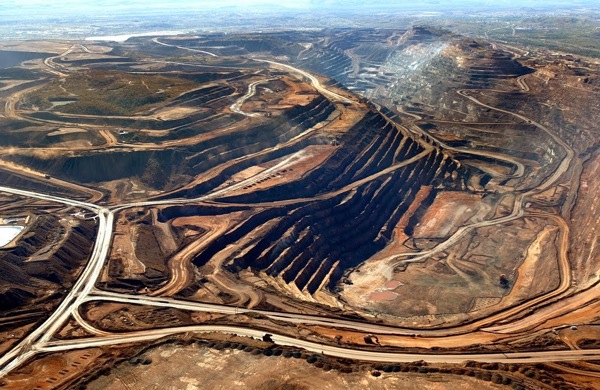
Australia's biggest iron ore mine
(http://www.mining.com)
Perhaps from our economic window we need to look at what mining has done to Australia. They had been developing their mining industry very long before with consistency. They were not bothered by the ever changing demands of raw materials that come from their mining industry. Then when the demand significantly increased, they were ready to supply. Recently it was reported:

“Australia’s mining sector has been hailed as a saviour to the economy, protecting it from the effects of the severe economic downturns experienced in the USA, Europe and other countries during and after the global financial crisis of 2007-08.

“There is no doubt that the minerals and energy boom of the 2000s was responsible for much of the growth in commodity export earnings. It also protected economic growth rates and, to some extent, jobs during this time. The mining boom was in large part due to the significant increase in demand for raw materials and energy by China and India during their very rapid economic growth over the past decade.

“The mining sector currently contributes around 8.5% to Australia’s GDP (total output), and employs around 2% of the workforce (about 220,000 people).

“The mining sector’s biggest impact is on exports - in recent years it has made up over 50% of Australia’s total export earnings. The effect of the mining boom on exports has been huge – for example, between 2000 and 2010, the value of exports from mining rose by over 120%, from $63 billion to $139 billion.

According to the Australian Bureau of Statistics and the Department of Industry and Science, earnings from minerals and energy exports reached $195 billion last year.” (Australia’s ‘five pillar economy’: mining May 1, 2015 6.46am AEST http://theconversation.com/australias-five-pillar-economy-mining-40701).

“Mining contributes about 5.6% of Australia's Gross Domestic Product….Of the developed countries, perhaps only in Canada and Norway does mining play as significant a part in the economy; for comparison, in Canada mining represents about 3.6% of the Canadian economy and 32% of exports, and in Norway mining, dominated by petroleum, represents about 19% of GDP and 46% of exports. By comparison, in the United States mining represents only about 1.6% of GDP.” (Mining in Australia From Wikipedia, the free encyclopedia https://en.wikipedia.org/wiki/Mining_in_Australia).

Jubilee Operations # 1, Kalgoorlie, Western Australia, 2007
http://www.sbs.com.au/dirtybusiness/
I am not an economist nor am I an expert mining engineer. I am just one of those wondering why we as a nation---a land blessed with so much mineral abundance, could not rise above our economic struggles and be like South Africa, Russia, Australia, Ukraine, Guinea, Canada and Norway. We have started long before and we were lost because we have never established a definite economic direction, a significant point of destination and purpose. Hence, we walk in circles; in every change of administration we find ourselves again back to where we began. We are no better than those men and women portrayed in a psychological experiment:

“Have you ever heard the old saying that people who get lost tend to walk in circles?

“Jan L. Souman, a German psychologist, wanted to determine scientifically if this was true. He took participants of an experiment to a large forest area and to the Sahara desert and used a global positioning system to track where they went. They had no compass or any other device. Instructions to them were simple: walk in a straight line in the direction indicated.

“Dr. Souman later described what happened. “[Some] of them walked on a cloudy day, with the sun hidden behind the clouds [and with no reference points in view]. … [They] all walked in circles, with [several] of them repeatedly crossing their own path without noticing it.” Other participants walked while the sun was shining, with faraway reference points in view. “These … followed an almost perfectly straight course.”

“This study has been repeated by others with different methodologies. All returned similar results.

“Without visible landmarks, human beings tend to walk in circles.” (FIRST PRESIDENCY MESSAGE June 2013, Walking in Circles By President Dieter F. Uchtdorf Second Counselor in the First Presidency See Jan L. Souman and others, “Walking Straight into Circles,” Current Biology vol. 19 (Sept. 29, 2009), 1538–42).

Our country, divided into miniscule islands and islets, is just a tiny part of an immense gigantic world. To insist on protecting our environment as against utilizing the vast resources that our most generous God had planted deep into our soils as a means to provide the best opportunities needed by our ever growing population of poverty stricken people, is to me a show of hypocrisy. How can we be so naive as to be concerned of the welfare of the people around the world when we don’t even have empathy and compassion on the people in our backyard by refusing to utilize the abundant mineral resources which God blessed our land? Why do we need to worry about the environmental problem of the whole wide world, when our very own small backyard is filled with hungering people? While we wanted the world to know that we are one of the willing contributors to the environmental protection of our planet earth, we need first to resolve or curve if not totally sweep out and clean our land with poverty. In the real sense, our inputs may not even be felt. The trees that we may have planted, may not even cover the vast mineral lands which were developed by the giant countries such as Russia, Australia, Canada, South Africa and others. While our people are suffering in poverty amidst the richness of our mineral lands, these giants of countries are enjoying the abundant economic life that the same mineral resources afford. We are a hungry and starving people standing on and surrounded in perfect view of the richness and blessed abundance of our land.

The chocolate hills of the Philippines
Don’t get me wrong, however, I still believe in the preservation of our environment. Yet, no matter our efforts, it is impossible for us to suppress the earth’s evolution as it did before. I do believe without equivocation “…that the earth will be renewed and receive its paradisiacal glory” (Articles of Faith 1:10). John also testified of the earth’s future: “And I saw a new heaven and a new earth, for the first heaven and the first earth were passed away; and there was no more sea” (Revelations 21:1).

We therefore need to utilize these vast and incalculable resources of which our land is blessed while we still need them for our survival. We have laws enough to protect our environment while unearthing those hidden bounteous treasures. We have sufficient laws for the mining sector to follow so as not to viciously spoil and destroy our ecosystem. Let these laws awaken from their graves as zombies to propel the implementing agencies to strictly execute the provisions as being intelligently enacted.

As in the marathon, we have learned so much from our previous races and at this time we have started it right under President Benigno Simeon Aquino III’s administration. We are now on the way to a glorious finish. Visible economic landmarks are now in place. It is true that we still have so much to do, but we have more time, for the race is still a long way to go. However, rather than begin again, let us instead press on and hold fast to what have been significantly accomplished. The route may still be difficult, steep and uphill, but we have to follow through for that is the only way to victory.

Thursday, September 3, 2015

FAITH AND HOPE: OUR EVERLASTING ASSURANCE

By: Norberto Betita
(This is part of the book I am writing)

We are lucky enough that together in our democratic system, we have a long legacy of a Christian Religion and a belief in God and Christ. Faith and hope which are the strongest component in our Christianity is to be our driving force to action. The apostle Paul taught: “Now faith is the substance of things hoped for, the evidence of things not seen” (Hebrew 11:1). Faith is a positive and self-assured anticipation of and craving for blessings that are to come. Hope is the yearning of such blessings through faith in God. Thus faith gives us the confidence and convincing power that the economic progress and abundant life that we are hoping for, but which we still do not see, is sure to eventually come to pass. Faith and hope bestow upon us that high level of assurance which motivates us to act so that the things we hoped for will ultimately be realized.

It is like our belief in God. We have faith that there is a God in Heaven although we have never seen Him. Faith makes this reality of God an “evidence of things not seen.” Nobody had seen the actual creation, but faith provides us the conviction that the things which are on earth and beneath its crusts are the work of His divine hands and were thus placed there for a purpose---apparently for the use of man, for which He declared: “For the earth is full, and there is enough and to spare; yea, I prepared all things, and have given unto the children of men to be agents unto themselves” (D & C 104:17).

Our democracy-empowering Christian religion supports our belief in the sanctity of life that is why we vehemently oppose the death penalty. It is a scaffold that protects the rights of every citizen by which we are free to do as we please within the limits provided by our laws. It supports the importance of equal opportunity for people upon which our government is mandated the responsibility to provide better employment prospects for its citizenry. It calls for the importance of personal honesty and integrity in whatever preoccupation and venture we are involved, be it in private or in government.

I believe that our democracy in the Philippines is sound, but it can only thrive long and become healthier if those strong religious principles are made the foundation and building blocks in our political system. When democracy is short of obedience to strict religious principles and the unenforceable laws of God, many of the important freedoms of our people are deprived. Such that because of dishonesty and corruption in government, and greed for wealth and honor, many of our citizens were robbed of the opportunity for better employment and the right to providently provide for their needs. Not only is our democracy threatened by the measure of our disobedience to religious principles and God’s laws, but our opportunity for economic growth and progress is laid on the line.

As many of our people increased in wisdom and secular learning, they started to set in defiance their religion. They begin to doubt their faith. Their secular learning becomes their personal dogma and doctrinal guide. They start to make themselves the god of their own vanity and conceit. We are warned by no less than our National Hero, Dr. Jose Rizal:

“No, let us not make God in our image, poor inhabitants that we are of a distant planet lost in infinite space. However brilliant and sublime our intelligence may be, it is scarcely more than a small spark which shines and in an instant is extinguished, and it alone can give us no idea of that blaze, that conflagration, that ocean of light.

“To doubt God is to doubt one's own conscience, and in consequence it would be to doubt everything.” (Jose Rizal Letter to Fr. Pastells (4 April 1893). https://en.wikiquote.org/wiki/Jos%C3%A9_Rizal

Therefore, let us not be swallowed up in our unbelief. Let us continue to be God loving and hold fast to the religious legacy for which we are so blessedly endowed. Let our faith drive us to confident action while the sun shines brightly before us as a beckon of a hopeful tomorrow and not wait for heavier rains to come. Otherwise we will be as the people during the days of Noah who refused to believe of the prophesied flood; enjoying the worldly amusements and pleasures under the light of sunshine. Eventually the rain comes and all were swallowed up into the depths of the deluge excepting Noah and his family.

To doubt our faith is to believe that we will fail. Doubt or non-belief is still a belief---a belief that what we hoped for will never come nor will it ever be attained. Our faith to be able to choose the best runner for our national race to economic recovery and future progress and development, will surely give us the inspiration and motivation to elect the most qualified men and women to continue what President Aquino had productively started. This is not to say that I am endorsing the candidate of President Aquino’s political party, but that we should vote according to the dictate of our own conscience and those who will be elected should take the beat to steady the course of the good that the Aquino government has done, while working to find resolve for those left undone---poverty, ignorance, insurgency, political infidelity and corruption, and immorality. Thomas S. Monson once said: “Remember that doubt and faith cannot exist in the mind at the same time, for one will dispel the other. Whereas doubt destroys, faith fulfills” (“Great Expectations,” BYU devotional address, 11 January 2009, lds.org).

Indeed, as we use the power of faith in God and Christ as an assurance of the things we hoped for, and observe and examine the results, we will be surprised to see the outcome in people’s lives. The peace, unity, harmony and love that comes into the families and the joy and gladness they enjoy even in adverse circumstances, strengthens our societal foundations towards a common national victory. Ezra Taft Benson, Secretary of Agriculture of the United States of America for eight years and President of the Church of Jesus Christ of Latter-Day Saints observed:

“The Lord works from the inside out. The world works from the outside in. The world would take people out of the slums. Christ takes the slums out of people, and then they take themselves out of the slums. The world would mold men by changing their environment. Christ changes men, who then change their environment. The world would shape human behavior, but Christ can change human nature.” (Ezra Taft Benson. Born of God, October 1985, lds.org)

God has so much in store for the Philippines in terms of progress and development. But do we really have the needed faith and hope that assures us to consistently sustain the growth that we now experience onward to the prospects as estimated by reliable sources? Is the road we are trudging towards the vision of a more progressive Philippines clear and devoid of barriers and stumbling blocks? Would our ever changing government leadership guarantee continuing support to the innovative concepts which the straight path of President Aquino introduced---moving our nation upwards to its destined economic laurels? The steady growth of the Philippine economy is already an assurance of better days ahead. It is reported:

“The Economy of the Philippines is the 39th largest in the world, according to 2014 International Monetary Fund statistics, and is also one of the emerging markets. The Philippines is considered as a newly industrialized country, which has been transitioning from one based on agriculture to one based more on services and manufacturing. In 2014, the GDP by Purchasing power parity was estimated to be at $692.223 billion.

“Primary exports include semiconductors and electronic products, transport equipment, garments, copper products, petroleum products, coconut oil, and fruits. Major trading partners include the United States, Japan, China, Singapore, South Korea, the Netherlands, Hong Kong, Germany, Taiwan, and Thailand. The Philippines has been named as one of the Tiger Cub Economies together with Indonesia, and Thailand. It is currently one of Asia's fastest growing economies. However, major problems remain, mainly having to do with alleviating the wide income and growth disparities between the country's different regions and socioeconomic classes, reducing corruption, and investing in the infrastructure necessary to ensure future growth.” (The Economy of the Philippines, Wikipedia, the free encyclopedia, https://en.wikipedia.org/wiki/Economy_of_the_Philippines).

Our vast resources are in place for utilization onward to a more developed economy. We should not give room for pessimism. We need to develop the capacity to consistently sustain the present growth of our economy with our laws and government, helping investors in establishing modern refineries and factories, and other infrastructures to open doors of opportunities for our people. Let us hold fast to these most reliable projections of the future. We need to clear the road by resolving barriers and stumbling blocks for the tiger cub to move and grow into a full grown economic tiger.

Let us consider these words from a loving God: “Inasmuch as ye shall keep my commandments ye shall prosper in the land; but inasmuch as ye will not keep my commandments ye shall be cut off from my presence” (2 Nephi 1:20).

Beyond the clouds of doubts in my mind, there glimmers a light of faith and hope, packed with confidence and optimism that indeed, there is an everlasting assurance that we will be able to attain the desired advancement and development of our economy onward to the road of a more progressive Philippines. To paraphrase the words of Isaiah as God promised His people Israel: “I have chosen [the Philippines] in the furnace of affliction… I have called him, I have brought him, and he shall make his way prosperous.” (Isaiah 48:10, 15).


THE PEDDLER AND THE BREEDING BOAR

The Samuel Barcelona, Sr. Story

By: Norberto Betita

Bro. Samuel Barcelona, Sr. 
He felt disinclined to tell his own story. He does not want to remember the difficulties he had been through which started very early in his life. He was born in Talisay, Cebu in conditions of extreme poverty and despondency. Despite difficult circumstances, he tried his best to go to school. He was excited for his elementary graduation, but his elation turned into despair when he was told by his father that he will not be able to enrol in high school. He questioned his father, “Why his cousins were in high school and others even already in college?” However, he later understood his parent’s predicament.

He left their home in Talisay and went to Cebu City to find his future. Nobody would want to accept him for a job; he is too young and small to labor. So he went to the Cebu City Pier to do odd jobs of a porter---carrying cargoes of passengers arriving from different ports of origin. It was no formal employment; he just got up the ship and asked the passengers to allow him to carry their luggage. At times he is refused, but there were also others who allowed him out of pity. His earning was just enough for a meal or two in a day.

Life at the Cebu City Pier during those times was one of survival of the fittest. It is the abode of swindlers and criminals. [In fact a high school classmate and friend of mine was a victim of a swindlers group at the Cebu City wharf while waiting for a ship to Manila. He returned to Surigao City fleeced and drained of all that he possessed, except a rubber slipper, a short pant and a T-shirt.] Samuel was too small and young to fit in. Yet he tried to live on whatever such kind of life could provide. He had to sleep in the open---no pillows, no blankets. When bigger and older men would mistreat and annoy him, he would want to fight, but he realized that his tender and thin body was not strong enough to sustain the blows of bigger and more experienced strong hands. Then while he was strolling near the Pier Area, he found a karate school. He courageously talked with the Karate Master to allow him to attend training. Since he did not have money, he pledged to do errands for the master. Luckily he was admitted. 

During his karate training, as a young boy, he learned more about discipline. He was continually reminded that “karate as a martial art is only for tournament and self-defense.” He was told by his karate master that “running from trouble is the first defense and karate should be the last recourse.” While on training and doing errands for his karate master, he continued to work in the Pier Area for a living. He singly faced his life’s battle. The environment upon which he has been daily exposed should have made him a menace. But he chose not to be counted as an annoyance to society. He was grateful for his karate training for he had been continually reminded to do good always despite his unfavourable circumstances.

The Barcelona Family
For some time he lived in such dreadful environment while trying to live to be just as good as he can be. [His experience and exposure in such wicked domain saved me from being a victim when he personally confronted the swindler who threatened me with a knife many years later in the same pier area in Cebu City.] When he had grown enough to be admitted for work, he applied as a security guard at the University of the Visayas. His Karate certificate helped him to be employed. There was no high school diploma requirement during those times for one to be admitted to work as security guard. While working, he took time to enrol in high school. But when he was about to graduate, he married and eventually resigned from work and returned to his hometown of Talisay, Cebu. There he worked as broom maker together with his wife. Not long after, he and his wife were invited by his brother-in-law to come to Surigao City to work as peddler of household trappings. That’s when he started the peddler’s life. 

In Surigao City he was kind of being trapped in the mire of despondency and destitution. But he faced with courage and faith the sullen tide of his depressed condition. Each day he carried a heavy bundle of household trappings, tools and equipment and walked around the city throughout the day. He carried with him a small white towel to wipe his sweat-filled face as he walked under the heat of the rising sun. He built a one-room nipa hut in a squatter’s area for his family to dwell as he could not afford to rent a house nor even just a room. His being used to such condition of difficulty during his boyhood allowed him to tolerate the deplorable condition. Once, his Karate expertise was tried when his brother-in-law and boss was mauled by porters at the pier area of Surigao City while unloading their cargoes. He came to the defense and they fought with courage using their martial arts skills until the police came. Since then nobody ever dared to abuse them.

Bro. and Sis. Barcelona


Every little extra income from his peddling around the barangays of Surigao City and towns in the Province of Surigao del Norte, he would buy for a chicken or a duck to raise as a vivarium type of storage for emergency preparedness. He also planted some garden to supplement any shortages of income. While peddling around these areas, he observed some of his clients raising backyard hog fattening. He also noticed that there were sows that need breeding boars. It gave him the idea to raise his own domesticated pigs on his backyard. 

In time he and his family became members of The Church of Jesus Christ of Latter-Day Saints. He understood better the meaning of all his struggles as he learned to understand the purpose of life and his relationship to God. Each Sunday, he would gave to me, his branch president, his donation envelope for his tithing and every first Sunday, he and his family fasts and prays and gave of their fast offerings equivalent to the cost of two meals to help the poor although he himself and his family are also experiencing difficulties. In the face of great hardships, he never allowed his children to go hungry, but to have something to eat while at home and school. He wanted to provide his children with the needed education which he failed to attain. He determined to carry every required burden for them to experience the glory of attainment.

When his brother-in-law became bankrupt, as a result of uncontrolled vices, Samuel and his wife, rather than return to Talisay, Cebu with their growing children, took courage to start the same business by their own. They borrowed high cost funds at 15-20 percent interest per month. They built another nipa hut as storage for their stocks. He made a hand cart for him no longer to carry the heavy loads on his shoulders. When the children are at school they together pushed the handcart to downtown and find places where they can display and sell their stuffs. 

To make sure he would not misappropriate his small and high cost capital, he eventually raised hogs for fattening to be sold during school openings to cover the school needs of his children. Later he cared for a breeding boar and a sow. He learned to care for the animals by inquiring from the department of agriculture. While peddling he would contact people who are raising sows and recommend his breeding boar. Eventually he got an increasing number of clients for his breeding boar.

With friends in the church.


He was kind of devastated when two of his elder daughters were married a short time after graduation from high school. That was not what he wanted them to be. But he persevered and continued to encourage his children to get the highest education that they can possibly attain. He never failed to support his remaining children through college. He wanted them fortified while their actual battle with life is still distant. This was the time when he had to work double time. After peddling household trappings, the peddler and the breeding boar walked together a kilometer or two to their appointment. In the crucible of adversity he learned a lesson from the words of James E. Faust, “In the pain, the agony, and the heroic endeavors of life, we pass through a refiner’s fire, and the insignificant and the unimportant in our lives can melt away like dross and make our faith bright, intact, and strong.” (The Refiner’s Fire, Ensign, May 1979, p. 53). He pressed on and just kept going.

Notwithstanding his inadequacies and limited capacities, he volunteered to accept responsibilities in the Church as called upon, even to such a heavy responsibility of a Branch President, presiding over 500 members. I have heard him speak many times in Sacrament meetings and I witnessed his wisdom and learning of the spiritual things elevated to a level beyond his own. His messages are simple but deep in meaning and inspiringly penetrating. His simple words edified his listeners. Until now he is still on voluntary service as a member of the District High Council. 

As college needs of his three children magnified, his capital was eventually misappropriated to a more important investment for the future of his children. What were left were the peddler and the breeding boar. He soon got a part-time job as church custodian, while continuing his breeding boar peddling. In seasons, he would raise two or three breeding boars for hire. He made sure that his breeding boar will not grow old as to be no longer acceptable for slaughter. He learned how to castrate pigs and even his large breeding boars.

During his difficult times, he did never asked any financial assistance from the government, except for information and training on how to make his hog and breeding boar livelihood thrive. He had since bought a motorcycle and installed a side car to ferry his breeding boars from place to place.

The peddler is now getting old and the breeding boars had since been replaced from time to time. Yet the enduring partnership of the peddler and the breeding boar remained alive and still productive as to provide a little more than their daily needs. 

The boy Samuel who once struggled with life, engulfed in the midst of swindlers and criminals, now remembers those days when like Caleb of old he would shout, “As yet I am as strong this day… Now therefore give me this mountain… if so be the Lord be with me” (Joshua 14:11-12). More of those mountains of adversity did come which he tried to surmount and conquer with faith in the Lord. He has borne his adversities wisely and now he is relishing a life of peace, happiness and contentment. During my interview with him, he said, “I was so strong during those moments of great adversity because I have a wife whose tender arms always cling onto my weary hands even when we are asleep, with unwavering confidence that we can survive.” All his five children are now married. Three of them earned college degrees and are now gainfully employed. Those who married early after high school graduation are now assisting him in his breeding boar and tricycle livelihood.

He loves telling his grandchildren of his personal history motivating them to face their personal challenges with faith and courage as he did, for as a seed buried deep in the soil grows into a more stronger and sturdy tree, so is the person who encountered the darkest moments of life will taste the sweetest fruit of triumph and victory. He expects them to write their life's stories better than the story of the peddler and the breading boar.